

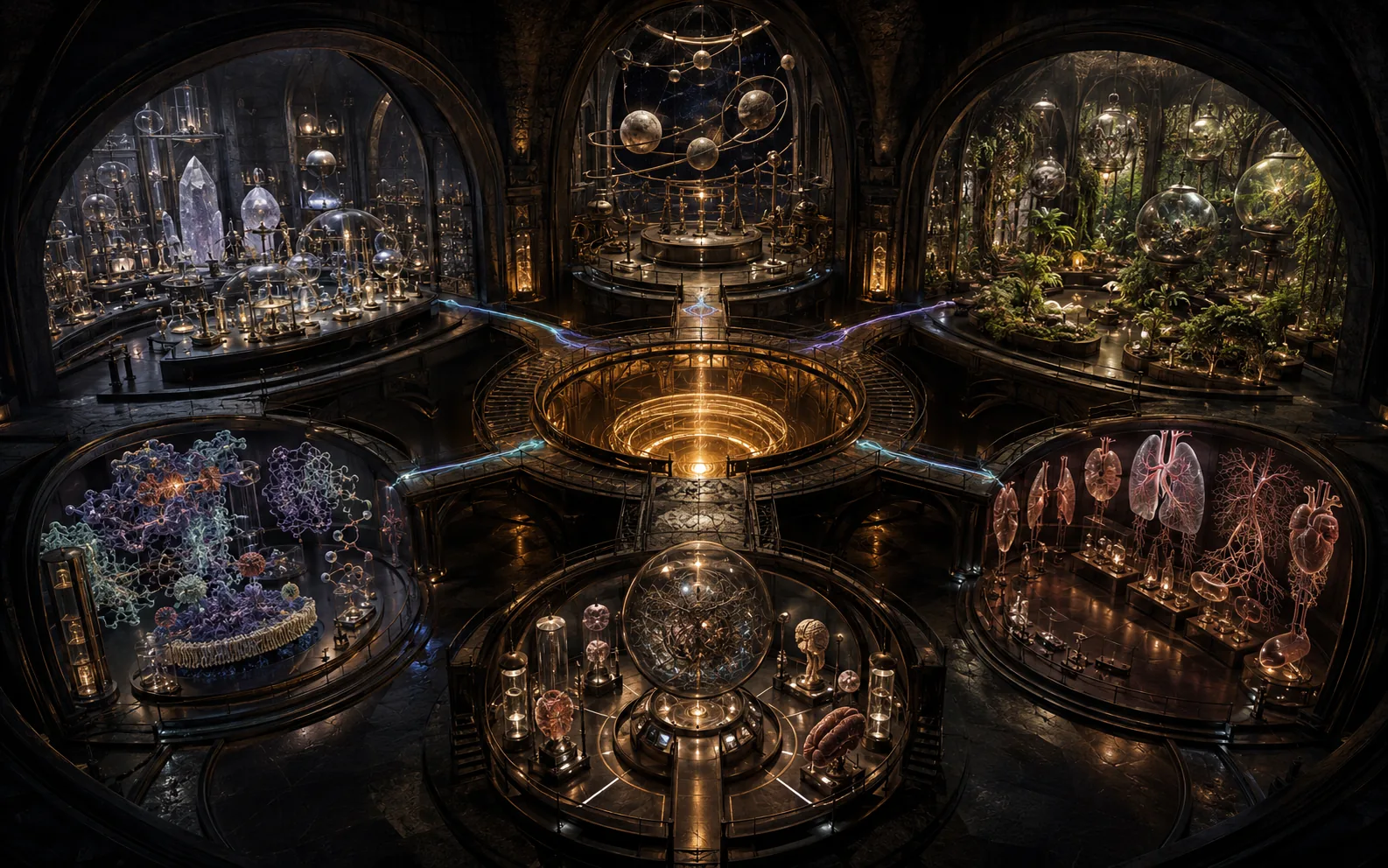
Biology
Cells, inheritance, evolution, organisms, and the organization of living systems.
Build durable command of the prerequisite sciences your path to medical school requires, then bring every tested subject together through one comprehensive MCAT course built around practice, review, and repair.
These are the current core subjects—not a fixed ceiling. The library will expand across the science coursework learners need for their target medical schools while keeping each discipline rigorous and its relationships visible.
Cells, inheritance, evolution, organisms, and the organization of living systems.
Atomic structure, bonding, reactions, equilibrium, thermodynamics, and solutions.
Structure, reactivity, stereochemistry, mechanisms, and biologically relevant functional groups.
Motion, forces, energy, fluids, electricity, waves, optics, and quantitative models.
Proteins, enzymes, metabolism, information flow, signaling, and energy transfer.
Quantitative reasoning, functions, probability, data interpretation, and the statistical foundations used across science and medicine.
Psychology, sociology, behavior, culture, research methods, and the social contexts that shape health.
Human structures and systems understood through regulation, interaction, and constraint.
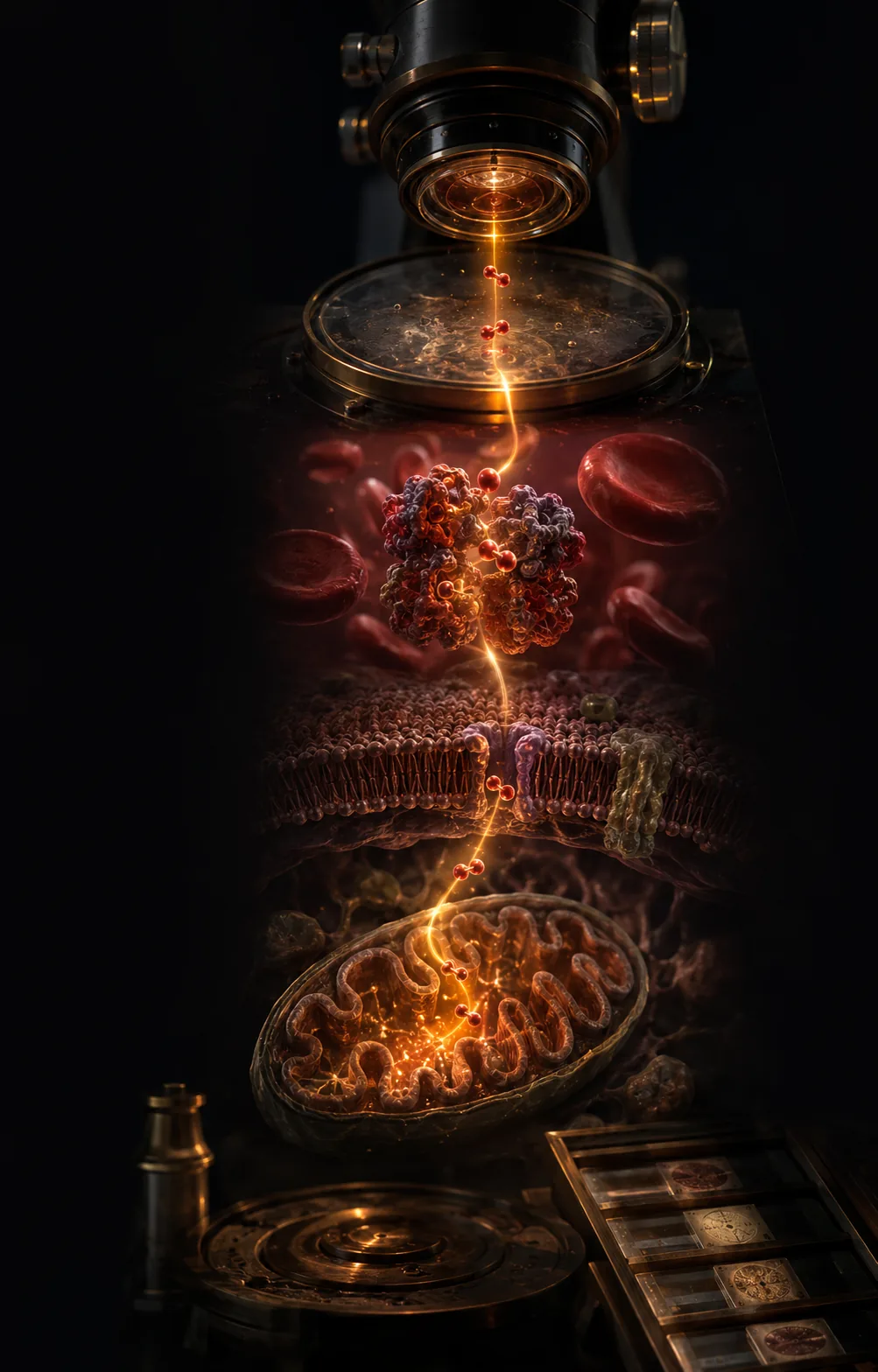
Medicine asks learners to move between physical law, chemical interaction, molecular machinery, cellular behavior, and whole-body physiology. Activities make those changes of scale explicit.
The comprehensive MCAT course draws from the full Science library and adds extensive passage practice, discrete questions, timed work, cumulative review, error analysis, and targeted repair.
This is one sustained preparation experience—not four disconnected courses. It moves through content review, original practice, full-section integration, timing, cumulative review, and repeated repair.
Learn the content, retrieve it under pressure, apply it to unfamiliar passages, study every miss, and return to the underlying concept until the reasoning holds.
Physics, general chemistry, organic chemistry, biochemistry, biology, and quantitative passage reasoning.
Read complex passages, locate structure and evidence, evaluate claims, and reason within the author’s world.
Biology, biochemistry, organic chemistry, and general chemistry across experimental and physiological contexts.
Psychology, sociology, research methods, behavior, health, culture, and biological influences on experience.
Use units, variables, estimation, evidence, and uncertainty to build a scientific explanation that can be tested.
Trace oxygen through pressure, diffusion, binding, transport, physiology, and cellular energy without hiding the change of scale.
The current core expands as needed across prerequisite science, worked reasoning, practice, feedback, and repair.
Every tested section brought together through extensive passage practice, integrated review, error analysis, timing, and deliberate revision.